Sustainability Secretariat

UNIVERSIDAD AUTÓNOMA DE NUEVO LEÓN

SECRETARÍA DE SUSTENTABILIDAD 

Climate Action Program

Climate Action Program

The Climate Action Program of the Autonomous University of Nuevo León (PAC-UANL) is a comprehensive institutional strategy aimed at mitigating and adapting its operations and environment to climate change. This initiative is part of its sustainable management model, aligned with its mission to train highly qualified professionals, develop cutting-edge research, and promote technological innovation with a strong environmental commitment.

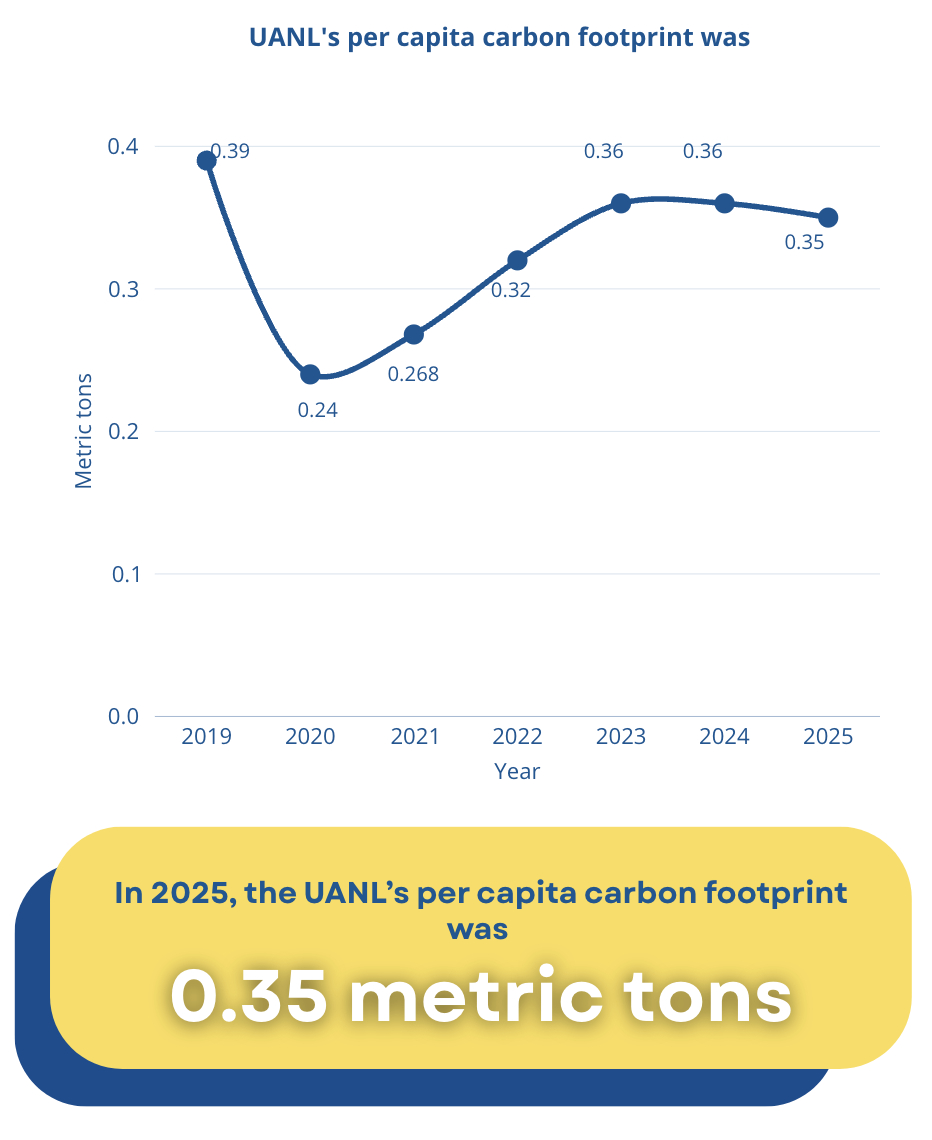
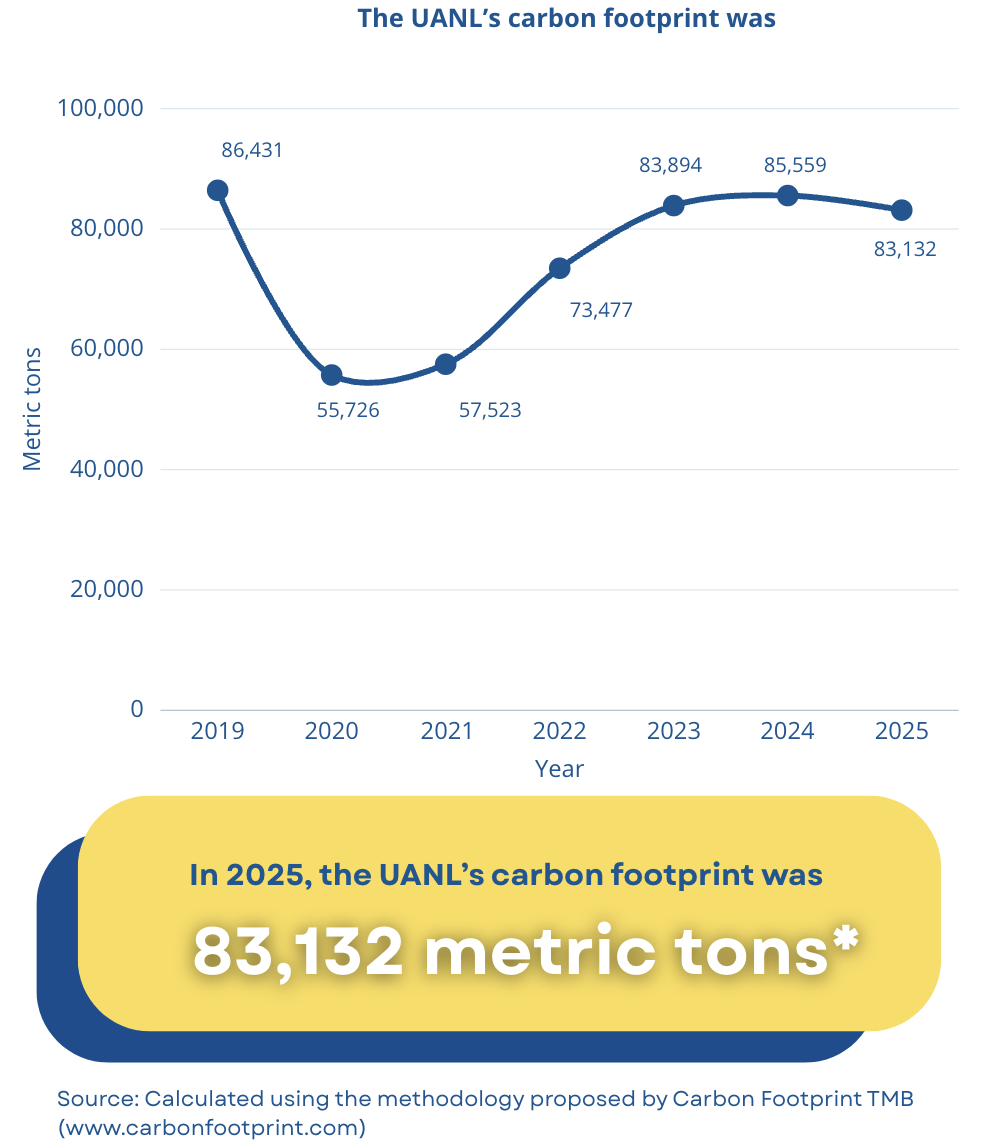
The mitigation component of the PAC-UANL encompasses actions aimed at reducing greenhouse gas (GHG) emissions, such as energy efficiency, efficient water management, promoting public transportation and non-motorized mobility, encouraging responsible consumption, and implementing circular economy models. These strategies have allowed the institution to reduce the growth of its carbon footprint and foster sustainable practices within the university community.

In terms of adaptation, the PAC-UANL includes the construction of sustainable infrastructure, sustainable mobility projects, the promotion of applied climate research, and the conservation of natural areas under the protection of the UANL.

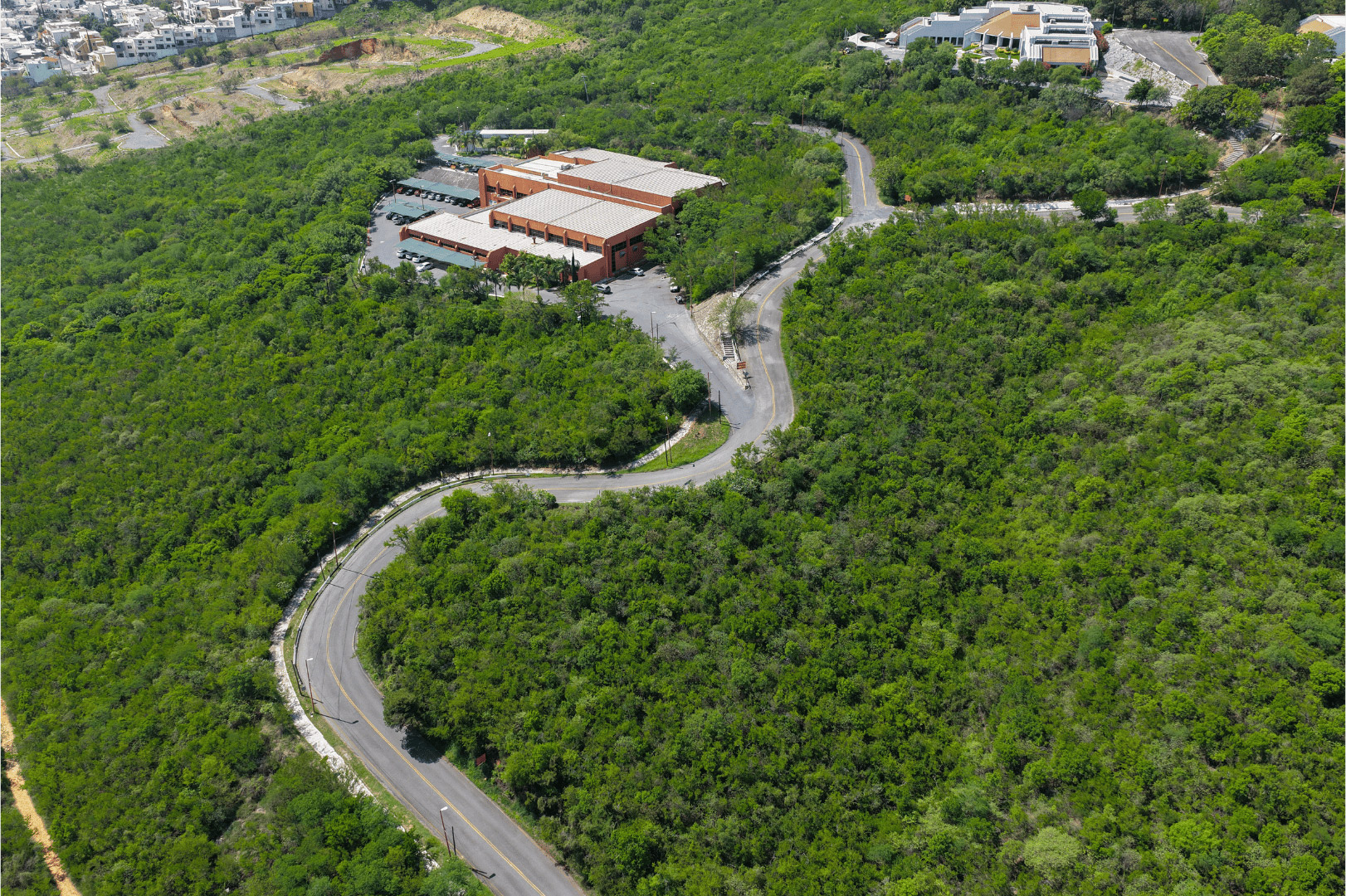
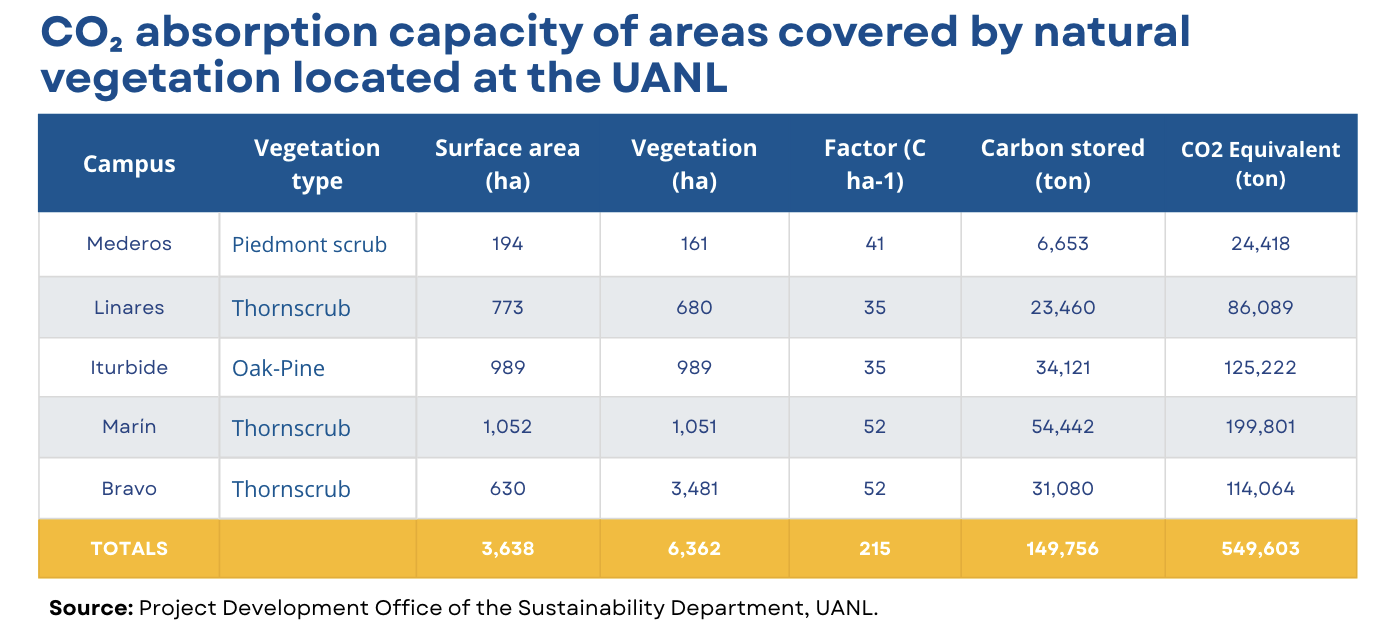
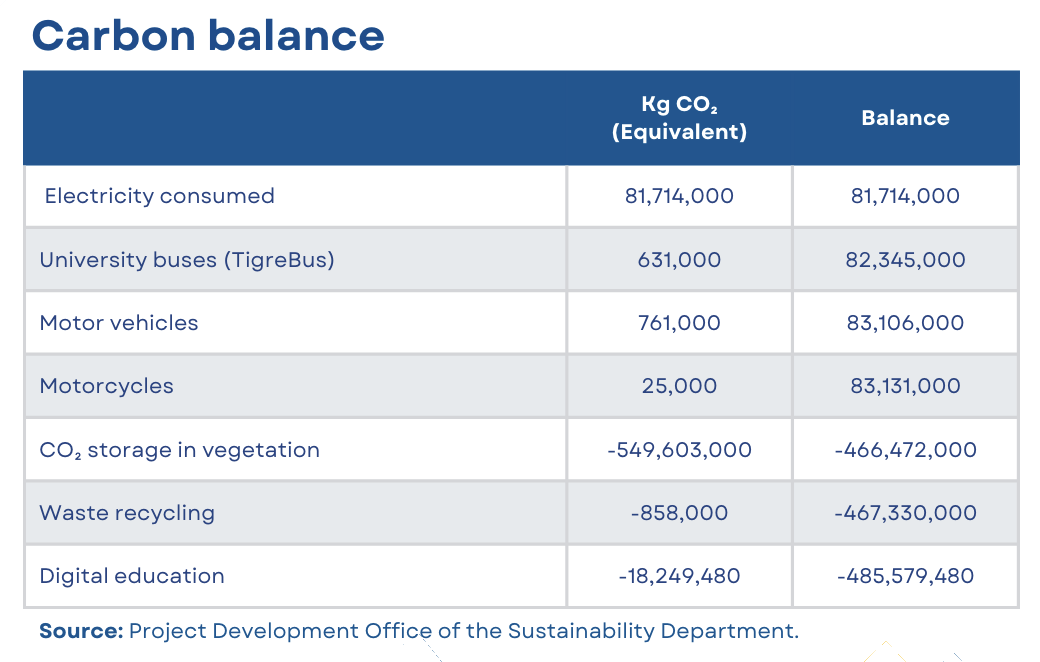
Of the 3,812 hectares occupied by the UANL, 98.5% have well-preserved vegetation cover, allowing it to absorb approximately 500,000 tons of CO₂ equivalent annually, acting as a strategic carbon sink. This capture capacity, combined with mitigation measures, has allowed the institution to maintain a positive carbon balance, estimated at more than 580 tons of CO₂ equivalent.

Additionally, the UANL faces high climate vulnerability due to its geographic location, exposed to phenomena such as heat waves, prolonged droughts, and intense rainfall. These events threaten both the infrastructure and the health and well-being of the university community. Given this situation, the PAC-UANL has been designed to reduce the impact of risks arising from climate change and ensure the continuity of educational and research activities.

Since 2023, the program has incorporated innovative systems for efficient water use, including rainwater harvesting and the reuse of condensate from air conditioning systems. These technologies have helped conserve water resources and reduce dependence on potable water.

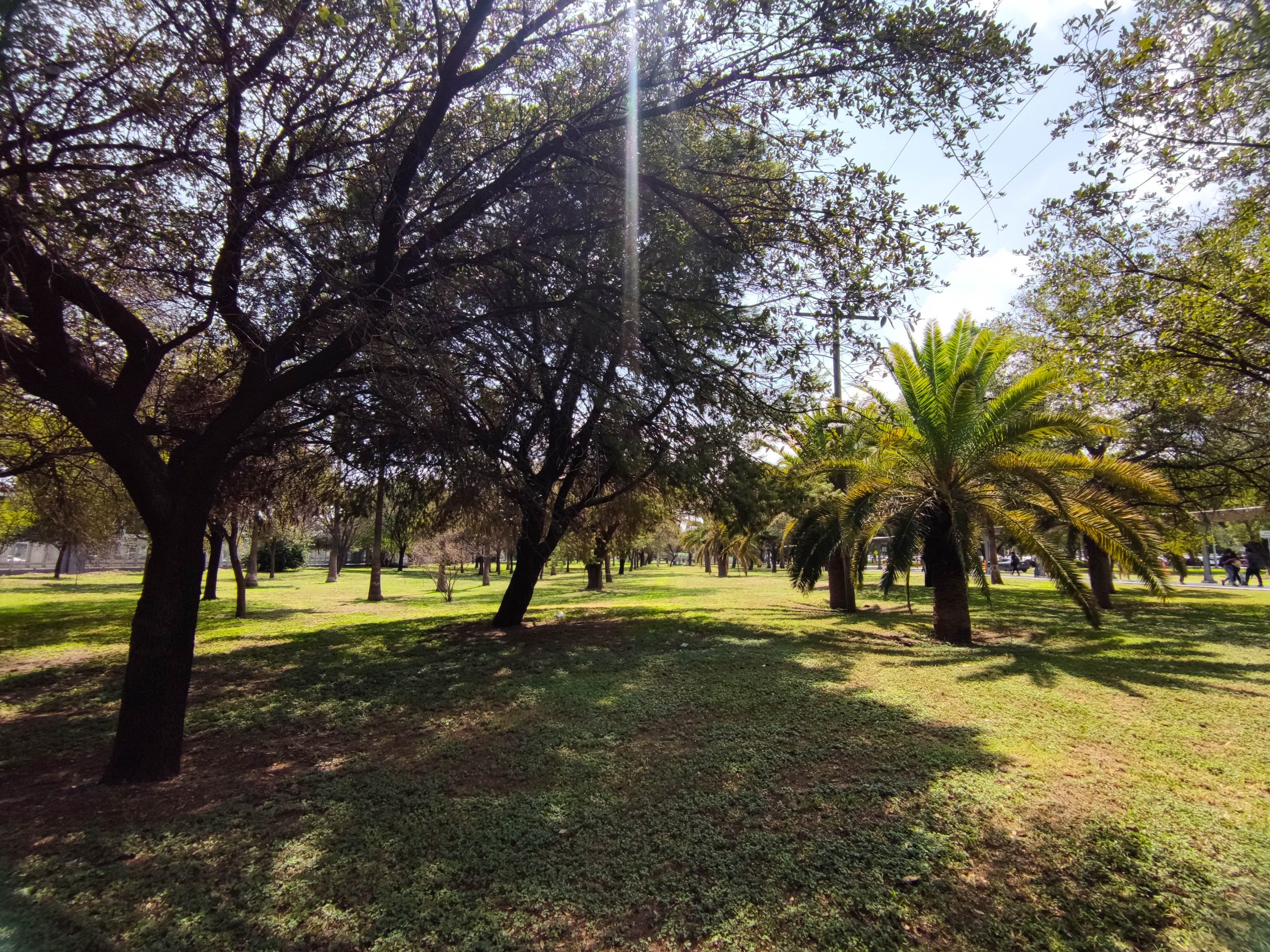
98.5% of the UANL territory has natural vegetation in good condition.

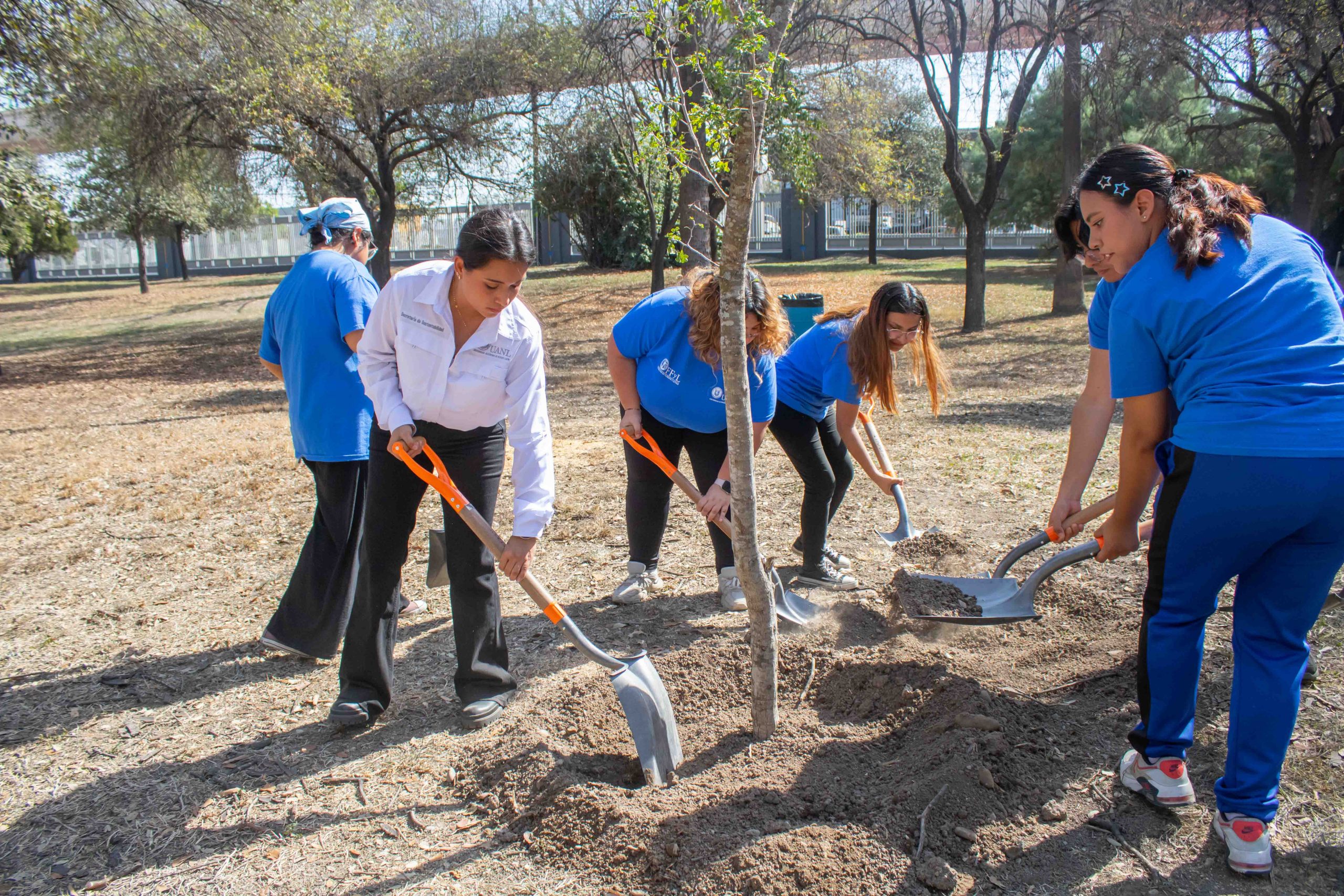
Another key focus of the PAC-UANL is biodiversity conservation through reforestation and the maintenance of natural ecosystems. These activities strengthen the ecological resilience of the campuses and improve the environmental well-being of their users.

The PAC also promotes environmental education and citizen participation through workshops, conferences, and community activities, extending its impact to the immediate social environment. Through collaborations with local governments, NGOs, and businesses, the university has developed community projects that promote sustainable practices and climate adaptation at the local level.

The operation of the PAC-UANL is aligned with the 2030 Agenda, especially with Sustainable Development Goals 4, 6, 7, 11, 12, 13, 15 and 17. Its design seeks to serve as a replicable model for other educational institutions and organizations interested in integrating climate actions into their operations, thus strengthening the transition to a more sustainable future.

The UANL has a carbon sink of approximately 550,000 tons of CO₂ equivalent

In 2024, UANL recorded a positive carbon balance of 484,000 tons of CO₂ equivalent

en_USEnglish