In the context of the current global digital age, there has been an increase in the generation of waste electrical and electronic equipment (WEEE), which can pose risks to the environment and human health when not properly managed.
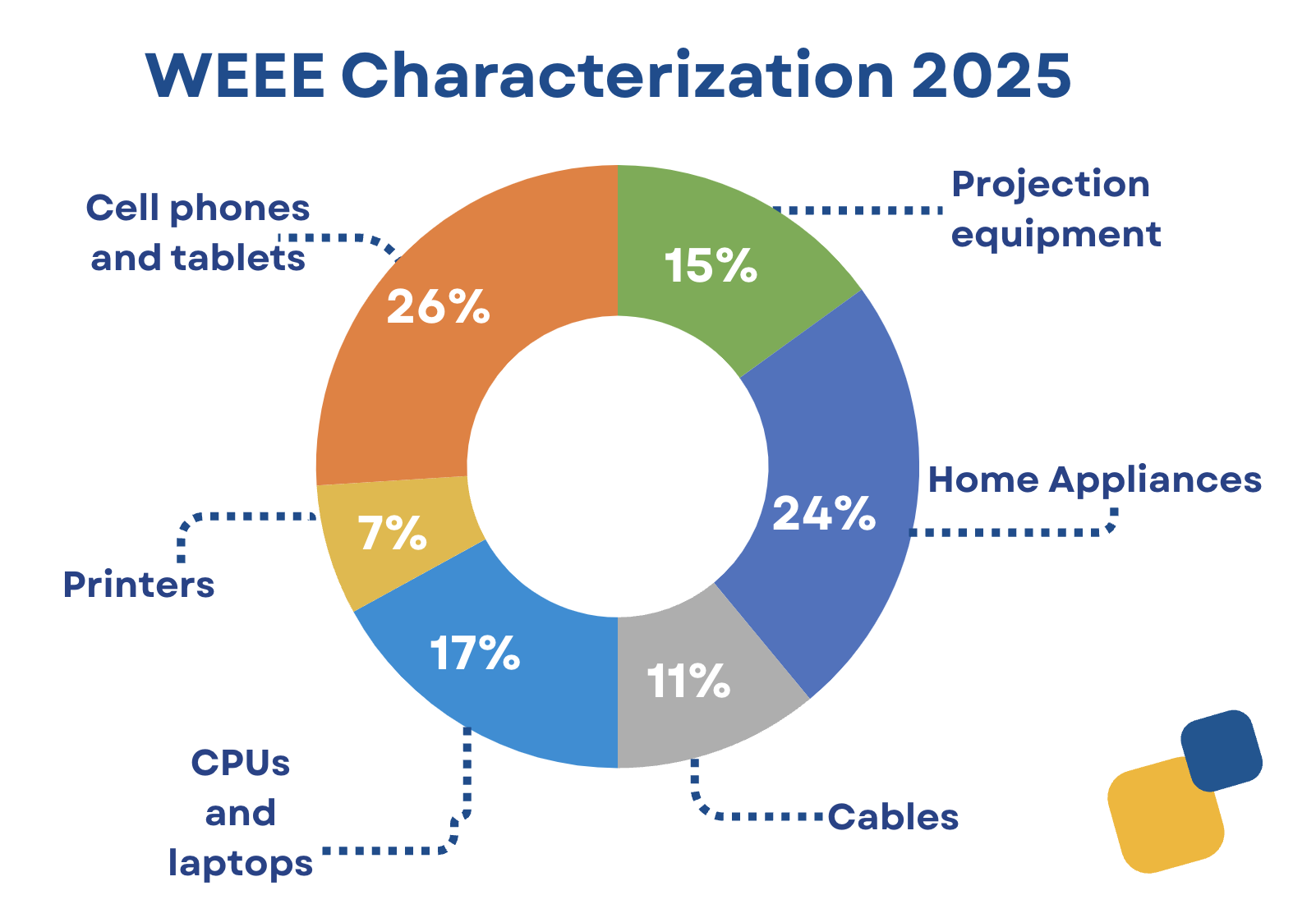
In 2025, the UANL collected a total of 15.81 t of WEEE through the electronic recycling campaign organized by the Sustainability Department in October, as well as during the Recycling Day held in June of the same year, promoting its environmentally sound management and disposal.
In 2025, 15.81 tons of Waste Electrical and Electronic Equipment were collected
Once collected by a service provider authorized by the state government, the waste is transported to specialized collection centers, where it is sorted by category and its various material components are separated. Then, each fraction is channeled to specific recovery processes. For example, plastic materials are sent to local recyclers to be used as raw material in the manufacture of new products, such as toys and pallets. Meanwhile, metals like copper and aluminum are sent to domestic smelters for the production of electrical wiring, copper piping, and aluminum sheets or rolls, among other products.
Finally, electronic components such as circuit boards and power supplies are sent to specialized companies abroad, where precious metals and other valuable materials are recovered and reintroduced into production cycles for the manufacture of various goods, including mobile devices, automotive components, fans, and everyday items.
Waste fats and oils from cafeterias
One of the main sources of surface and groundwater contamination is the improper disposal of waste generated during food preparation, particularly vegetable and/or animal-based oils and fats. In response to this situation, the UANL promotes a program for the collection and management of residual vegetable oil generated in the cafeterias operating on its campuses, in coordination with a specialized company that holds the necessary authorizations for its management.
In 2025, 27.08 t of vegetable oil were collected and sent for recycling to produce environmentally friendly chemical products and biofuels, contributing to the sustainable use of this waste.
The UANL has currently achieved 63% progress in the installation of grease and oil traps in the cafeterias located on its university campuses, as part of efforts to comply with applicable environmental and health regulations.
These installations are being implemented in accordance with the provisions of NOM-002-ECOL-1996 “Maximum Permissible Limits of Contaminants in Wastewater Discharges to Urban or Municipal Sewer Systems” as well as NOM-251-SSA1-2009 “Hygiene Practices for the Processing of Food, Beverages, or Dietary Supplements.”
In 2025, 27.08 tons of vegetable oil were collected from cafeterias operating on various university campuses.



 English
  Spanish