
Monitoring of aquatic environments
Water quality monitoring and determination of biological contaminants in aquatic environments
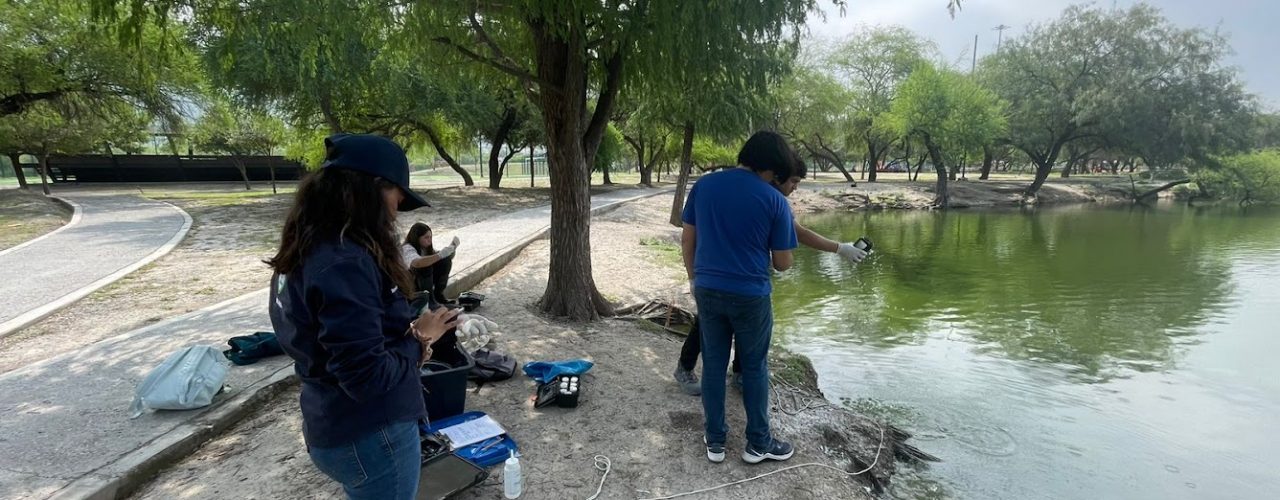
Since 2022, the Autonomous University of Nuevo León (UANL)—through the Project Development Directorate of the Secretariat for Sustainability and in collaboration with the Faculty of Veterinary Medicine and Animal Science (FMVZ)—has operated a program to monitor water quality and detect biological contaminants in aquatic environments located near university campuses and facilities within the Monterrey Metropolitan Area (AMM). This initiative addresses the need to assess, conserve, and restore urban and peri-urban water bodies, which are essential for environmental health, biodiversity, and social well-being.
The program aims to maintain a permanent monitoring system that provides a scientifically grounded understanding of the physicochemical and biological conditions of rivers, streams, lagoons, and wetlands associated with the university environment. To this end, parameters such as dissolved oxygen, pH, electrical conductivity, total dissolved solids, turbidity, and nutrients are analyzed, alongside biological contaminants of sanitary and ecological significance, including coliform bacteria, protozoa, and potentially toxic cyanobacteria.
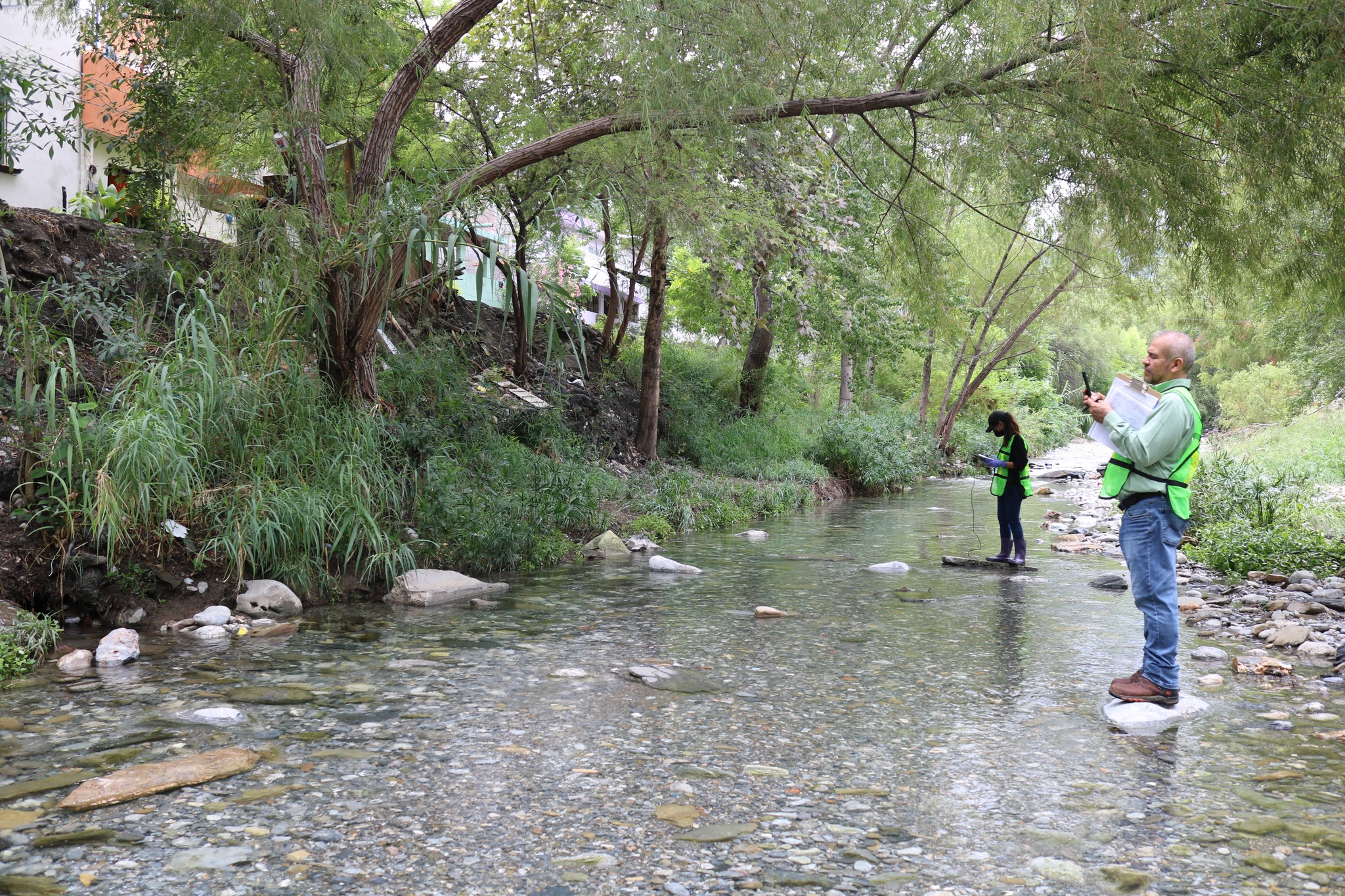
In 2025, five monitoring sessions were conducted in four urban aquatic environments.
The participation of the Faculty of Veterinary Medicine and Animal Science (FMVZ) has been strategic, contributing specialized capabilities in microbiology, parasitology, aquatic health, and laboratory analysis. This has strengthened the timely detection of pathogens and sources of contamination that pose risks to human, animal, and ecosystem health. Furthermore, the results obtained enable the formulation of measures for mitigation, control, and environmental restoration.
The program includes periodic sampling campaigns at sites selected based on their ecological representativeness, proximity to university facilities, and vulnerability to anthropogenic pressures—such as urban discharges, solid waste, stormwater runoff, and recreational activities. Samples are processed at the FMVZ Aquaculture Production Laboratory using microbiological, molecular, and culture-based techniques, ensuring data that is reliable and comparable over time.
Since its inception, the program has enabled the development of a formal research project and the completion of two university theses: one at the undergraduate level and one at the postgraduate level. Likewise, it has contributed to the training of technical personnel specialized in environmental monitoring, microbiological analysis, and water resource management, thereby strengthening institutional capacities in areas strategic to sustainability.
Key contributions of the Program include the development of public policy recommendations at the municipal and state levels aimed at improving the environmental conditions of aquatic ecosystems in the Monterrey Metropolitan Area—particularly regarding sanitation, ecological restoration, the prevention of health risks, and sustainable water management.
The information generated serves as a valuable input for UANL’s institutional sustainability reports and for decision-making regarding biodiversity conservation, green infrastructure, and urban resilience in the face of climate change.

 English
  Spanish