
UNIVERSIDAD AUTÓNOMA DE NUEVO LEÓN
SECRETARÍA DE SUSTENTABILIDAD
Menu
University Biodiversity and Forest Capital Monitoring Program
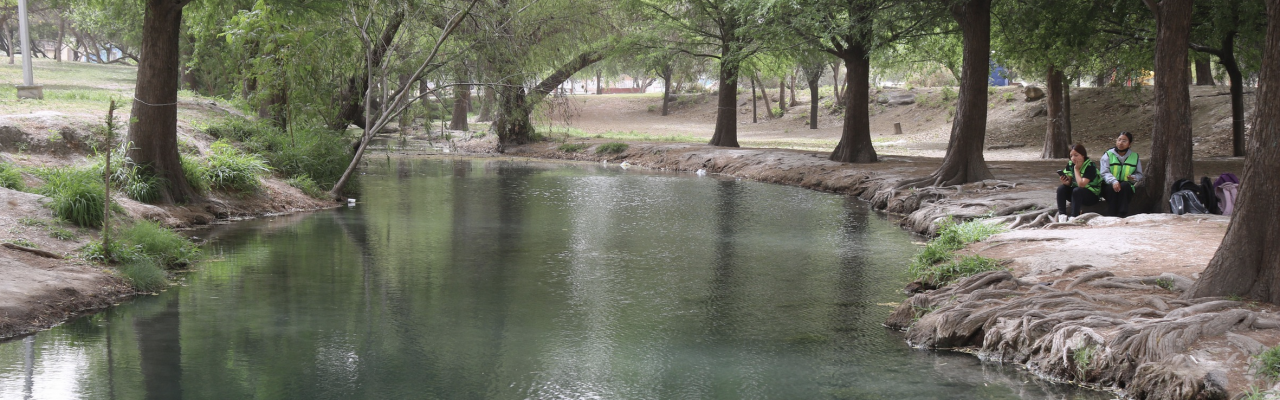
The Forest Capital and Biodiversity Monitoring Program of the Autonomous University of Nuevo León (UANL) constitutes an institutional strategy aimed at conserving, restoring, and sustainably managing the natural resources under its stewardship. Through this program, the UANL drives systematic actions for assessment, technical monitoring, and sustainable management of the ecosystems, species, and environmental services found across its university campuses, experimental stations, and other sites distributed throughout the state of Nuevo León.
The program's central objective is to generate reliable scientific information that enables the assessment of the conservation status of the university's natural heritage, the identification of environmental risks, and the design of intervention measures aimed at strengthening institutional ecological resilience. To this end, the program employs standardized field methodologies, georeferencing tools, cartographic analysis, geographic information systems, biological monitoring, and specialized databases that facilitate evidence-based decision-making.


Forest capital inventories of university facilities
One of the program's priority components involves the assessment of the university's forest assets. The trees located on academic and administrative grounds represent a strategic asset that contributes to carbon sequestration, oxygen production, the capture of airborne pollutants, rainwater infiltration, the mitigation of the urban heat island effect, and the provision of habitat for diverse flora and fauna. Furthermore, these green spaces foster the physical and emotional well-being of the university community by offering areas for social interaction, recreation, and connection with nature.
Against this backdrop, starting in 2022, the UANL has been carrying out a project titled “Assessment of the Current Status and Proposal for Sustainable Management of Forest Assets at University Units,” spearheaded by the Project Development Directorate of the Secretariat for Sustainability.
In 2025, four forest capital inventories were conducted, bringing the total to 16 inventories.
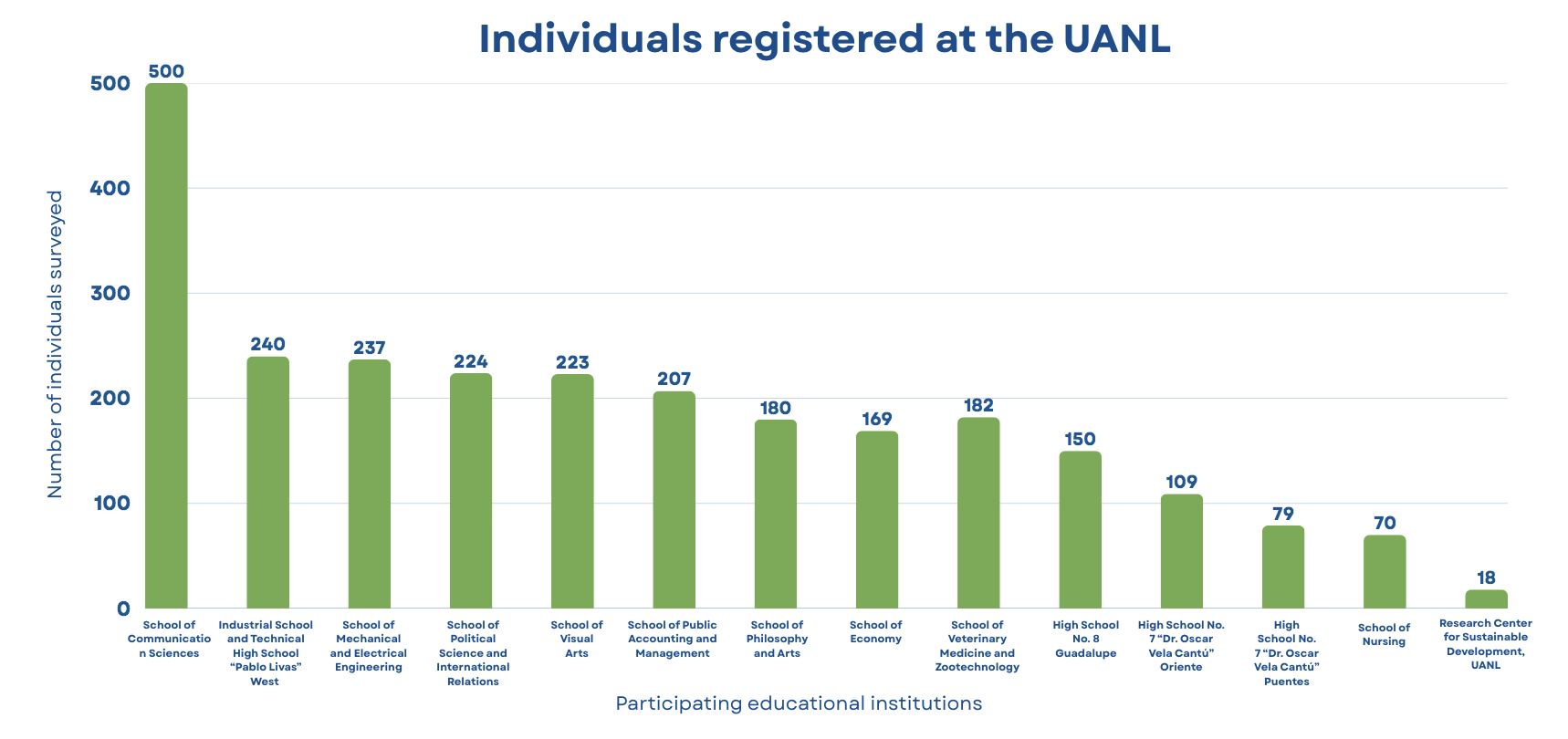
By the end of 2025, 14 assessments had been conducted at university facilities, along with two additional ones in public spaces of high ecological significance, thereby establishing a technical foundation for institutional environmental planning.
In total, 3,641 trees located across an area of 49.33 hectares—spanning university grounds and public spaces of ecological significance—were inventoried and evaluated.
Based on the physical condition and phytosanitary status observed among all trees surveyed on university grounds, 48% of the trees are in optimal condition, 41% require monitoring due to issues such as dead branches, crown obstruction by utility lines, disease, or invasive species, and 10% present safety risks.
These inventories have provided insight into variables such as species composition, dendrometric measurements, phytosanitary status, vegetation cover, population structure, and maintenance or replacement needs for the trees located on university premises.
Additionally, the program promotes ecological restoration, tree planting with native species, responsible water management, soil conservation, invasive species control, and environmental education for students, faculty, and administrative staff. In this way, the Autonomous University of Nuevo León strengthens the protection of its natural capital, improves the environmental quality of its campuses, and reaffirms its leadership as an institution committed to sustainability and climate action.
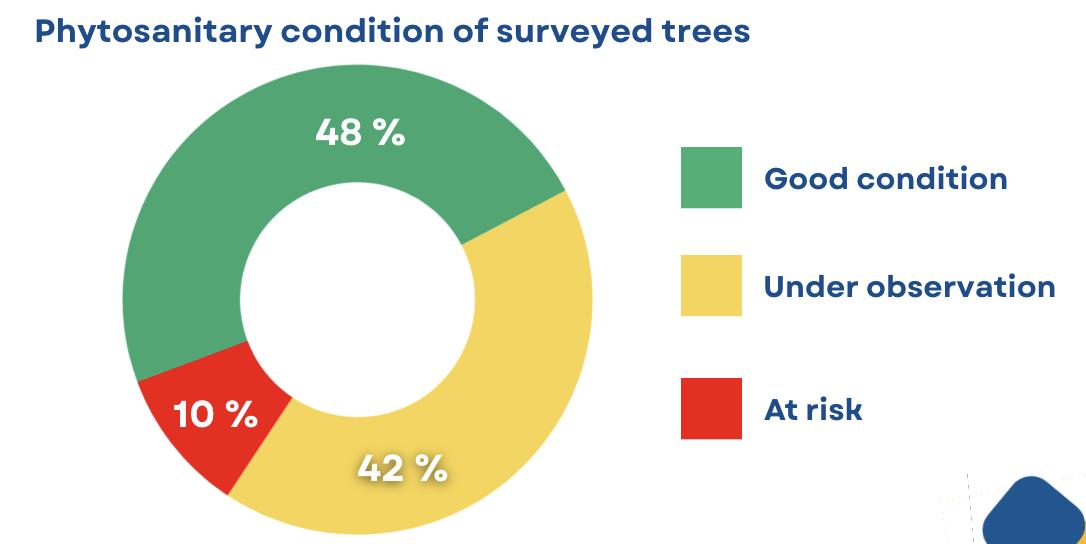
As of 2025, 3,641 trees located across an area of 49.33 hectares have been inventoried and evaluated.
Tree-planting program for university campuses and facilities
The Tree-Planting Program for Academic Units at the Autonomous University of Nuevo León constitutes an institutional strategy aimed at strengthening the environmental resilience of university campuses in the face of the effects of climate change and the rapid urbanization process that has transformed the Monterrey Metropolitan Area over recent decades.
Over the past 25 years, haphazard urban expansion—driven largely by economic growth and migration—has led to a significant reduction in areas covered by natural vegetation. Against this backdrop, university tree-planting initiatives represent an exemplary effort in ecological restoration and the recovery of urban green space, sending a clear message to authorities and the public about the need to integrate nature into city planning and development.
Since 2024, the UANL has been driving this program under the coordination of the Project Development Directorate within the Secretariat for Sustainability. By December 2025, two tree-planting events had been held with the participation of five university departments, resulting in the planting of 127 native trees—selected for their adaptation to the regional climate—with average diameters of two inches and heights of approximately 2.5 meters.
As of 2025, two tree-planting events have been held, during which 127 native trees were planted.


Key environmental benefits include carbon dioxide sequestration, which helps mitigate greenhouse gas emissions. Additionally, trees act as natural filters by trapping pollutants such as PM10 and PM2.5, thereby improving air quality and benefiting public health. They also boost oxygen production, regulate temperatures through shade and evapotranspiration, reduce the urban heat island effect, and facilitate rainwater infiltration, thereby supporting aquifer recharge and hydrological balance.
Additionally, planting trees fosters the creation of habitats for birds, pollinators, and other wildlife species, providing shelter, food, and breeding grounds. This increases local biodiversity and strengthens the ecosystem services essential for a sustainable city.
The social benefits are also significant. The presence of trees and green spaces creates areas for thermal comfort, relaxation, and social interaction for students, academic and administrative staff, and visitors. Various studies have shown that daily contact with nature helps reduce stress, improve concentration, encourage physical activity, and strengthen mental health.
The results obtained through the UANL Tree Planting Program have demonstrated that it is possible to create educational spaces that are healthy, resilient, and environmentally responsible.


Tree-planting program for university campuses and facilities
The Wildlife Monitoring Program on Urban Campuses at the Autonomous University of Nuevo León (UANL)—promoted by the Project Development Directorate of the Secretariat for Sustainability—constitutes an institutional strategy aimed at identifying, recording, and tracking species present within university grounds, recognizing these campuses as strategic areas for biodiversity conservation in the Monterrey Metropolitan Area.
This program takes on particular significance in an urban area characterized by rapid urban growth and the progressive loss of natural ecosystems. In this context, university campuses serve as urban oases, providing shelter, food, breeding grounds, and movement corridors for numerous species of birds, mammals, and other biological groups. Without these green spaces, many wildlife populations would face greater ecological pressures and a higher risk of disappearing from the urban environment.
The study was conducted based on the principles of island biogeography theory, which posits that vegetation fragments embedded within urban matrices can function as “ecological islands,” with biological richness determined by their size, environmental quality, and connectivity to other natural areas. From this perspective, UANL campuses serve as strategic nodes that facilitate species movement among ecological remnants—such as hills, rivers, parks, and other metropolitan green spaces—thereby strengthening regional biological connectivity.
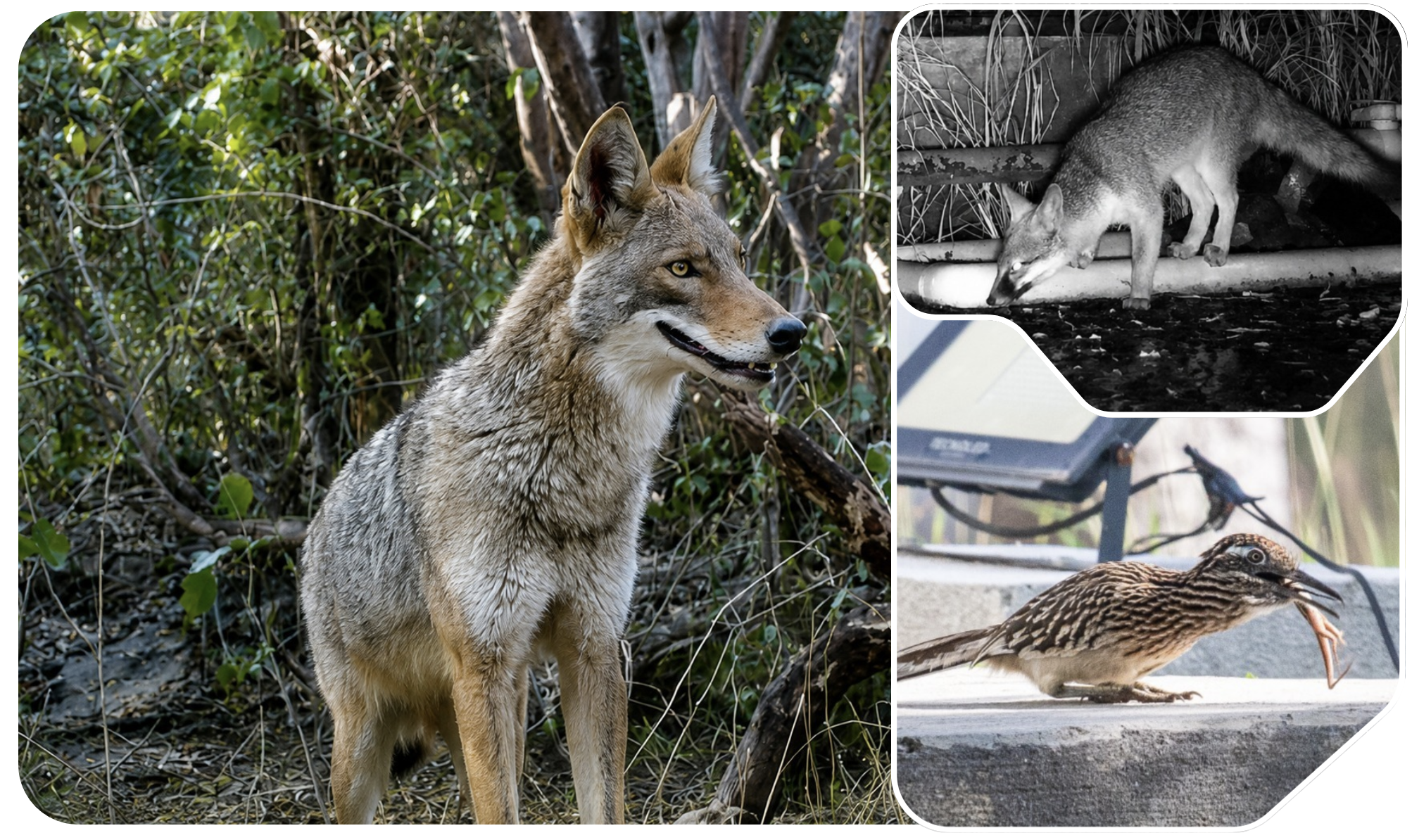
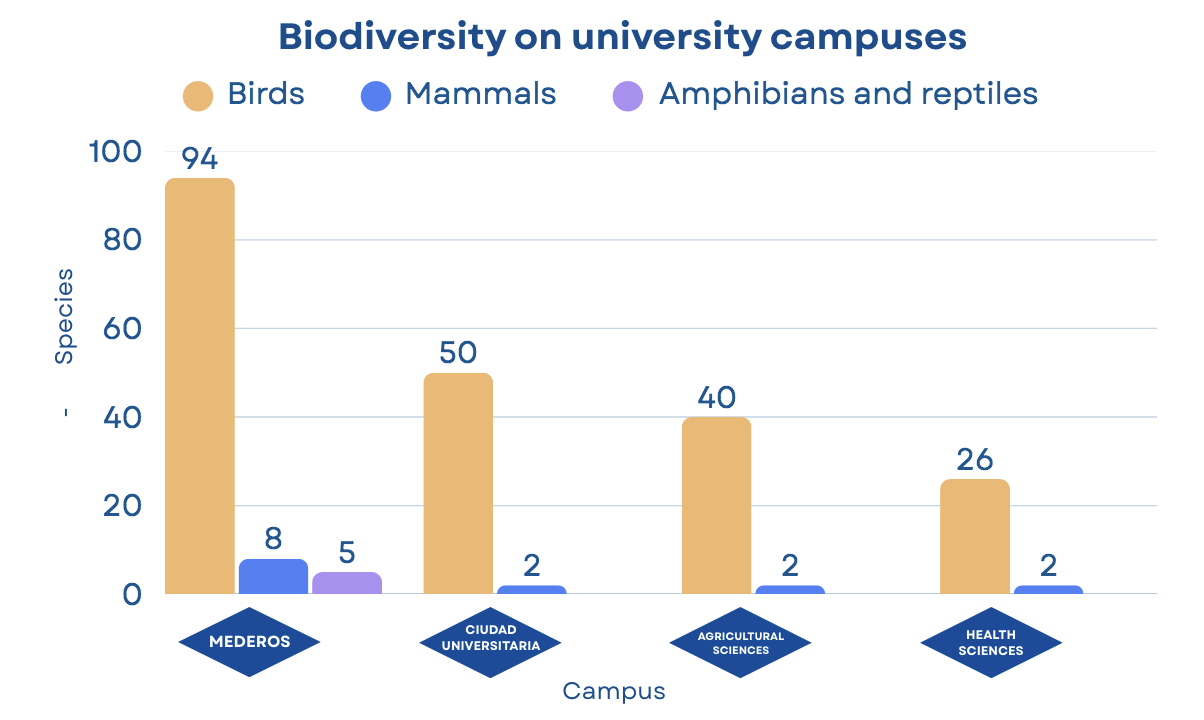
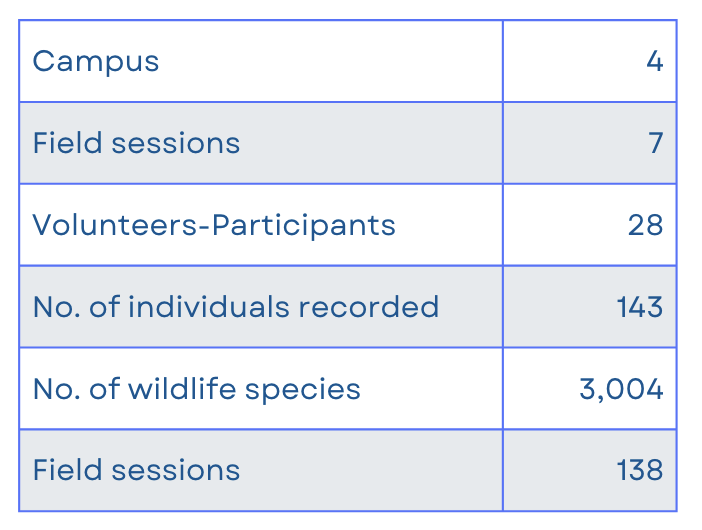
A monitoring campaign was conducted between June and December 2025 across the Ciudad Universitaria, Mederos, Agricultural Sciences, and Health Sciences campuses. During this period, 28 field sessions took place, involving 143 volunteers from the university community. The documentation, systematization, and analysis process was supported by specialists and students from the Ornithology Laboratory of the Faculty of Biological Sciences.
As a result, 3,004 wildlife records were obtained, representing 138 species of birds and mammals. These data confirm that university campuses maintain high ecological significance and play essential roles in biodiversity conservation within urbanized areas.
The importance of these results lies in demonstrating that university campuses are not only spaces that foster quality higher education, research, and innovation, but also living territories that contribute to the city's environmental resilience.
The information generated also serves as technical input to guide ecological restoration efforts, green infrastructure design, and the sustainable management of university green spaces, establishing the UANL as a national and international benchmark in urban sustainability and nature conservation.
 English
  Spanish