Sustainability Secretariat

UNIVERSIDAD AUTÓNOMA DE NUEVO LEÓN

SECRETARÍA DE SUSTENTABILIDAD 

Municipal Solid Waste (MSW)

MSW generated at the various UANL facilities undergoes sorting processes to recover valuable materials, which are then sent for recycling.

Subsequently, the remaining waste is collected and transported by specialized vehicles to the Comprehensive System for Ecological Waste Management and Processing (SIMEPRODE, for its acronym in Spanish).

At these sites, waste is deposited in containment cells designed for compaction and volume reduction, which are covered with layers of clay and soil, ensuring stabilization under controlled anaerobic conditions. These facilities are equipped with infrastructure for capturing and conveying the methane (biogas) generated during the anaerobic decomposition of the organic fraction, as well as monitoring systems using wells to control leachate.

The recovered biogas is channeled to a bioenergy plant where it is converted into electricity. This energy is used to power the public lighting grid in seven municipalities of the Monterrey metropolitan area, various state government agencies, Fundidora Park, as well as to supply energy to the Metrorrey public transit system. These actions contribute to the mitigation of greenhouse gas emissions at the national level.

In 2025, a total of 3,621.52 tons of MSW was generated at the UANL, of which 32% was organic waste and the remaining 68% was inorganic.

In 2025, a total of 3,621.52 tons of Municipal Solid Waste was generated
This amounts to 1,158.88 tons of organic waste and 2,462.64 tons of organic waste and 100% of them were treated at authorized final disposal sites.
Organic MSW

The organic waste generated at the various UANL campuses consists mainly of food scraps and waste from gardening activities. In 2025, a total of 1,158.88 t of this type of waste was generated, all of which was treated at the final disposal site.

This management scheme ensures that 100% of the organic waste generated by the UANL receives environmentally appropriate treatment, in compliance with the principles of integrated waste management and environmental protection established in current environmental regulations.

Waste Separation and Recycling Program (PROSER)

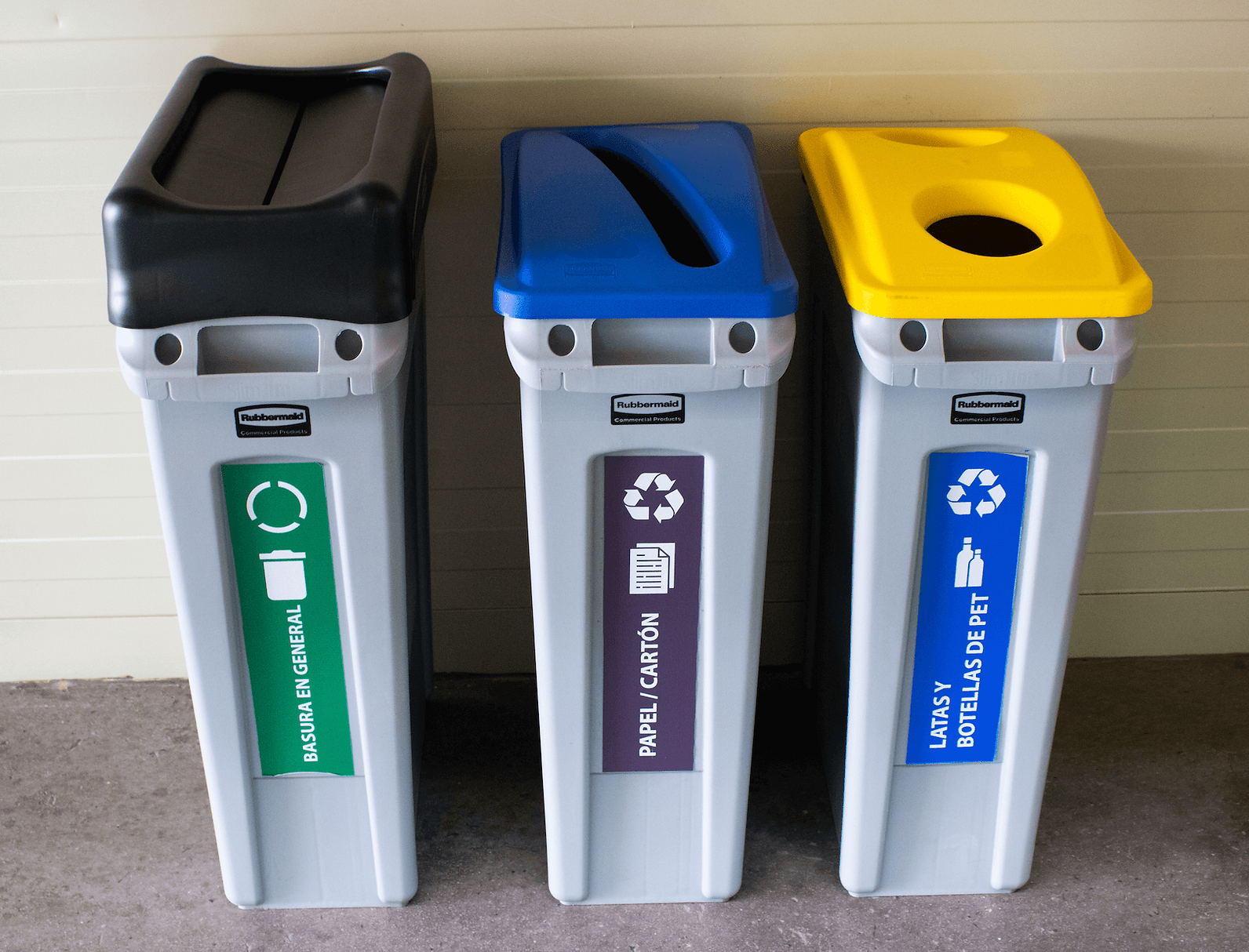
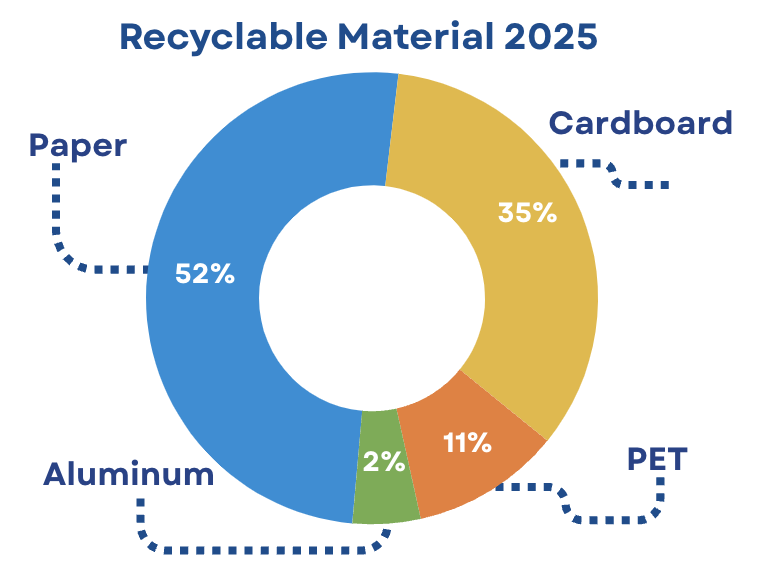
In February 2013, the UANL implemented the Waste Separation and Recycling Program (PROSER), which currently operates systematically across 84 university units, comprising 55 academic units and 29 central units. This program involves the separation of recyclable materials—primarily cardboard, paper, aluminum, and PET—at the source of generation, using containers specifically designed for this purpose. Once separated, the recyclable waste is collected by specialized local companies and subsequently reincorporated as raw material in various production processes for the manufacture of new products, such as recycled cardboard and paper, toys, labels, and furniture, among others. Under this scheme, recyclable MSW generated at the UANL is managed according to a circular economy model, in accordance with the principles established in Mexico’s General Law on the Circular Economy.

In 2025, the Waste Separation and Recycling Program (PROSER) operated in 84 facilities, collecting a total of 252.49 metric tons of recyclable material.

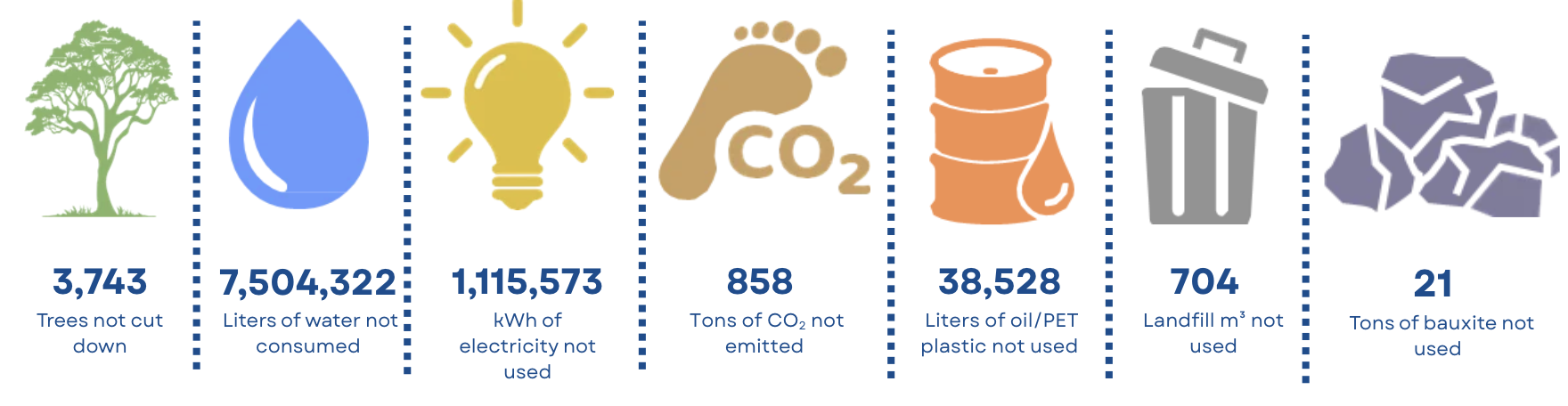
Between February 2013 and December 2025, a total of 2,506.41 t of recyclable material was collected, yielding environmental benefits such as: energy savings of 11,175,283 kWh, 75,363,868 L of water not consumed, 36,458 trees not cut down, 8,541 t of CO2 not emitted, 431,856 L of oil not used, 7,111 m3 of landfill space not used, and 233 t of bauxite not used.

In 2025, 252.49 t of recyclable material were collected, resulting in significant environmental benefits, including energy savings of 1,115,573 kWh and 7,504,322 L of water, among others, as shown in the following figure:

Program Overview

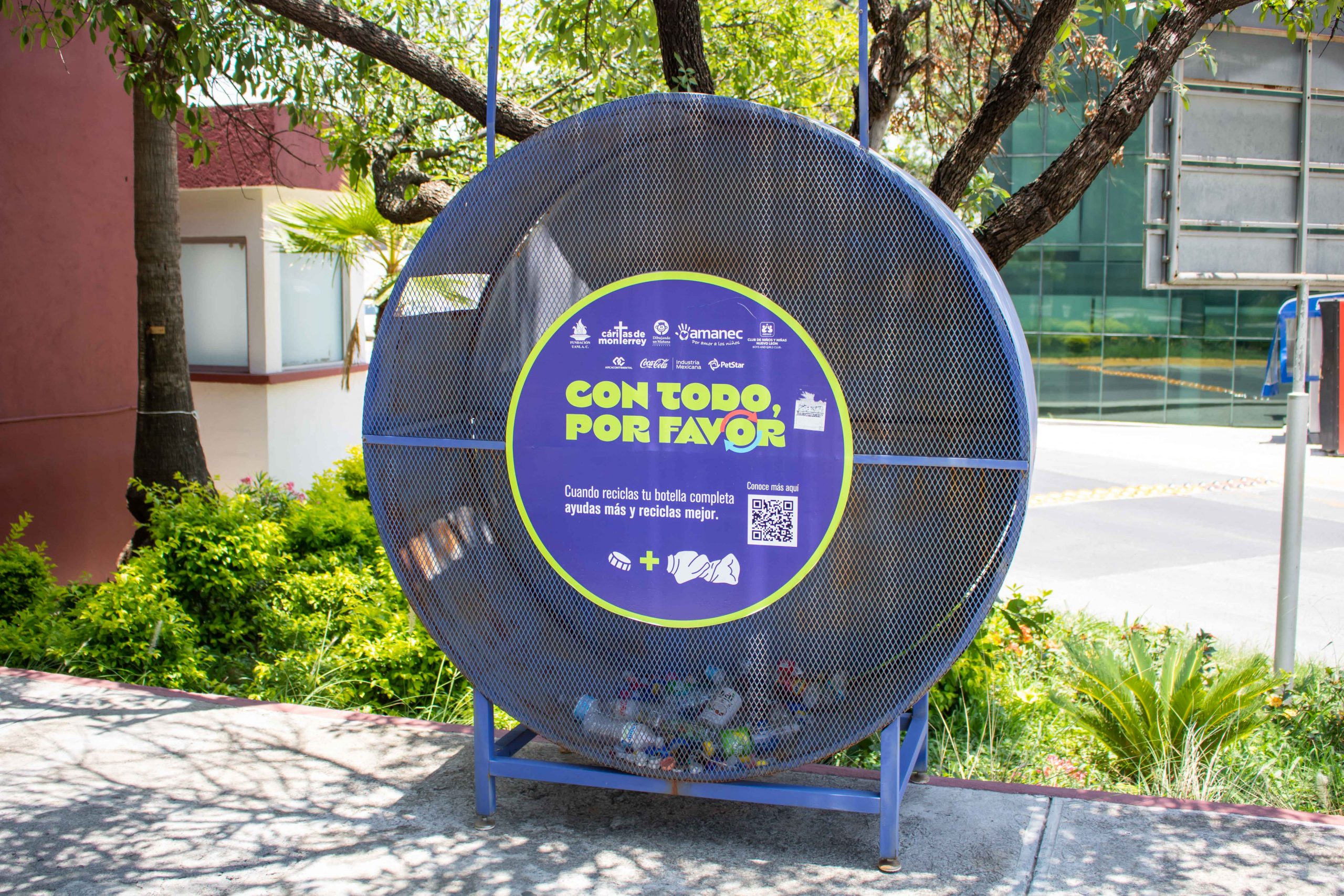
With the goal of expanding the scope of initiatives aimed at promoting a culture of recycling and raising awareness among the university community about the importance of preventing environmental pollution resulting from the improper management of plastic waste, the UANL, through the UANL Foundation A.C., is collaborating with the companies Arca Continental and PetStar on the “Con todo por favor” program, which began in May 2024.

As part of this initiative, 19 special containers were installed at strategic locations across the university campuses for the collection of empty PET plastic bottles, including caps and labels. The collected material is then transported to the food-grade PET recycling plant operated by PetStar, where it is processed to manufacture new bottles, thereby promoting the circular use of the material. In 2025, a total of 2,226 kg of PET was collected through this program.

2nd UANL Recycling Day

On June 5 and 6, 2025, the 2nd UANL Recycling Day was held, organized by the Sustainability Department through the Environmental Management and Operational Security Office, and hosted by the UANL Research Center for Sustainable Development (CIDESU, for its acronym in Spanish). The event was aimed at both the university community and the general public.

Under the slogan “Measuring the Impact of Our Actions,” the event aimed to promote proper waste disposal and environmental protection, as well as encourage recycling by collecting recyclable materials, including PET, aluminum, paper, and cardboard, among others.

The event was organized and managed with the support of the Comprehensive System for Ecological Waste Management and Processing (SIMEPRODE, for its acronym in Spanish), as well as the participation of more than 60 people, including students and faculty from various university departments, student associations, volunteers, and participating companies.

Special Waste Management (SWM)

In the context of the current global digital age, there has been an increase in the generation of waste electrical and electronic equipment (WEEE), which can pose risks to the environment and human health when not properly managed.

In 2025, the UANL collected a total of 15.81 t of WEEE through the electronic recycling campaign organized by the Sustainability Department in October, as well as during the Recycling Day held in June of the same year, promoting its environmentally sound management and disposal.

In 2025, 15.81 tons of Waste Electrical and Electronic Equipment were collected

Once collected by a service provider authorized by the state government, the waste is transported to specialized collection centers, where it is sorted by category and its various material components are separated. Then, each fraction is channeled to specific recovery processes. For example, plastic materials are sent to local recyclers to be used as raw material in the manufacture of new products, such as toys and pallets. Meanwhile, metals like copper and aluminum are sent to domestic smelters for the production of electrical wiring, copper piping, and aluminum sheets or rolls, among other products.

Finally, electronic components such as circuit boards and power supplies are sent to specialized companies abroad, where precious metals and other valuable materials are recovered and reintroduced into production cycles for the manufacture of various goods, including mobile devices, automotive components, fans, and everyday items.

Waste fats and oils from cafeterias

One of the main sources of surface and groundwater contamination is the improper disposal of waste generated during food preparation, particularly vegetable and/or animal-based oils and fats. In response to this situation, the UANL promotes a program for the collection and management of residual vegetable oil generated in the cafeterias operating on its campuses, in coordination with a specialized company that holds the necessary authorizations for its management.

In 2025, 27.08 t of vegetable oil were collected and sent for recycling to produce environmentally friendly chemical products and biofuels, contributing to the sustainable use of this waste.

The UANL has currently achieved 63% progress in the installation of grease and oil traps in the cafeterias located on its university campuses, as part of efforts to comply with applicable environmental and health regulations.

These installations are being implemented in accordance with the provisions of NOM-002-ECOL-1996 “Maximum Permissible Limits of Contaminants in Wastewater Discharges to Urban or Municipal Sewer Systems” as well as NOM-251-SSA1-2009 “Hygiene Practices for the Processing of Food, Beverages, or Dietary Supplements.”

In 2025, 27.08 tons of vegetable oil were collected from cafeterias operating on various university campuses.
en_USEnglish