
Sustainable mobility
Sustainable mobility
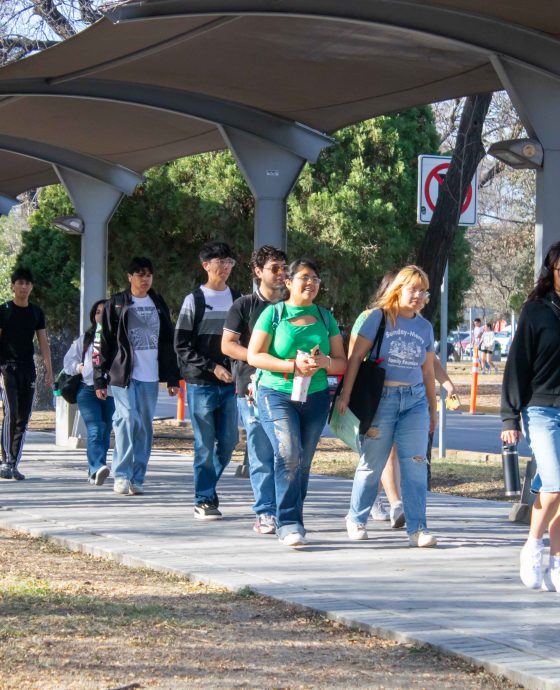
The Autonomous University of Nuevo León (UANL) is promoting a Sustainable Mobility Program aimed at transforming how the university community travels within and to the various university campuses located in the Monterrey Metropolitan Area (ZMM).
This program aims to reduce reliance on private automobiles and decrease the use of fossil-fuel-powered vehicles by promoting transportation alternatives that are more efficient, safe, accessible, and environmentally responsible.
The initiatives driven by the UANL address the environmental and urban challenges currently facing the Monterrey Metropolitan Zone (ZMM)—particularly those linked to air pollution, traffic congestion, rising greenhouse gas emissions, and the decline in quality of life resulting from the intensive use of motorized transport. In light of this situation, the UANL promotes a shift toward collective, electric, and non-motorized mobility models, while also fostering a university culture rooted in environmental responsibility and collective well-being.
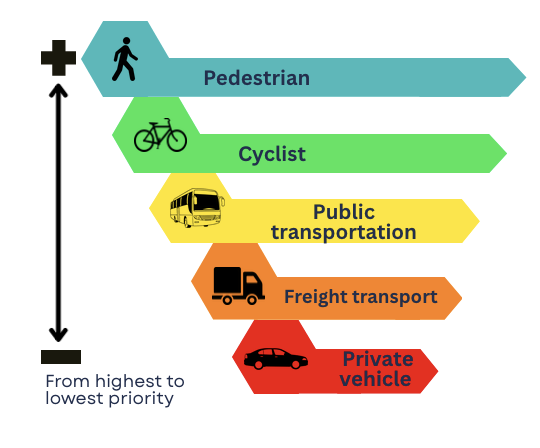
The Inverted Mobility Pyramid
As part of the vision guiding this program, the UANL adopts the principles established by the Institute for Transportation and Development Policy (ITDP)—specifically, the model known as the Inverted Mobility Pyramid. This approach establishes a hierarchy of priorities for the design and management of urban space, placing the pedestrian at the top level and subsequently prioritizing non-motorized modes of transport, public transit, and, finally, the private automobile.
From this perspective, the University recognizes that campuses must be conceived as accessible, safe, and inclusive spaces where people can move about efficiently and with a reduced environmental impact. Consequently, efforts are being made to enhance pedestrian infrastructure, bicycle lanes, and bicycle storage facilities, as well as to adapt access points and implement strategies that promote active mobility and reduce car usage within the university environment.
Furthermore, this model helps promote a new culture of sustainable mobility among students, faculty, researchers, administrative staff, and visitors, fostering commuting habits that are healthier and aligned with the principles of sustainable development.


Mobility, inclusion, and institutional development
Sustainable mobility is also a strategic element for strengthening social inclusion and university accessibility. In line with the principles promoted by the 2016 UN-Habitat Agenda, the UANL recognizes that equitable access to efficient mobility systems is a fundamental component for ensuring equal opportunities, strengthening social cohesion, and improving the population's quality of life.
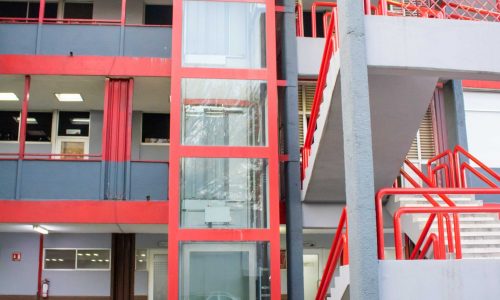
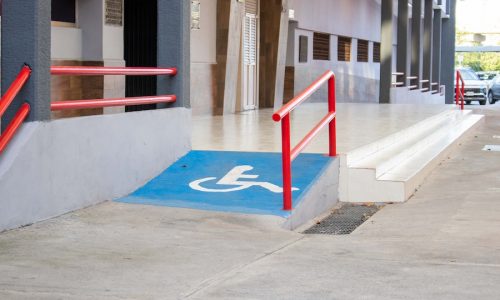
Accordingly, the Sustainable Mobility Program aligns with the objectives set forth in the University’s Institutional Development Plan, particularly those concerning the creation of campuses that are more sustainable, resilient, and people-centered. Through these initiatives, the UANL aims to establish university spaces that facilitate safe and accessible movement for all members of the community, including individuals with disabilities, pedestrians, and users of alternative modes of transport.
Likewise, promoting collective and non-motorized mobility schemes strengthens integration among the various university spaces and contributes to the development of urban environments that are more orderly, functional, and environmentally responsible.
Environmental and social benefits
The UANL Sustainable Mobility Program generates significant environmental, social, and economic benefits. From an environmental perspective, actions aimed at reducing the use of fossil-fuel-powered vehicles help lower emissions of greenhouse gases, atmospheric pollutants, and suspended particles that affect air quality in the Monterrey Metropolitan Area.
Furthermore, fostering active mobility through cycling and walking encourages healthier lifestyles by promoting physical activity and reducing factors associated with a sedentary lifestyle and various diseases linked to physical inactivity.
In the social sphere, this program strengthens inclusion and equity by facilitating access to safer and more accessible modes of transportation for the university community. Furthermore, it fosters a culture of shared environmental responsibility and social cohesion, contributing to the creation of university communities that are more integrated, participatory, and aware of contemporary environmental challenges.
From an economic perspective, sustainable mobility enables a reduction in individual commuting costs and fuel consumption, as well as the optimization of existing road infrastructure. In this way, the UANL reaffirms its commitment to building a sustainable university model that contributes not only to the well-being of its community but also to the resilient and environmentally responsible development of the Monterrey Metropolitan Area.


Conecta-UANL Program
The Conecta-UANL Program represents one of the most significant urban transformation and sustainable mobility initiatives driven by the Autonomous University of Nuevo León (UANL) in recent years. Since its implementation, the program has contributed significantly to the modernization and humanization of university spaces, promoting a new campus vision centered on people, universal accessibility, and sustainability.
Throughout its operations, Conecta-UANL has driven significant changes to the layout and functioning of Ciudad Universitaria, fostering the reduction of physical barriers to pedestrian movement, strengthening connectivity between academic units, and reclaiming public spaces aimed at enhancing social interaction and the quality of life for the university community.


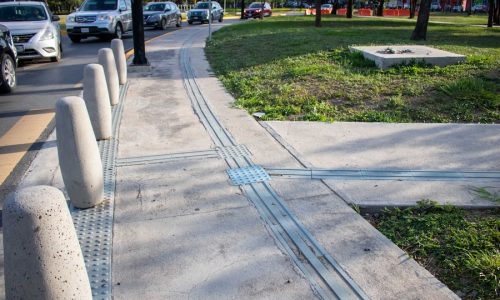
One of the program's key achievements has been the strengthening of infrastructure for pedestrian mobility and accessibility through the construction and upgrading of walkways, safe crossings, ramps, paths, and circulation areas. These improvements facilitate the safe movement of students, faculty, staff, and visitors—including individuals with disabilities—thereby advancing a more organized, inclusive, and functional campus model that prioritizes pedestrians within the university environment.
Furthermore, the program has contributed to strengthening institutional sustainable mobility strategies by promoting safer and more efficient movement within university campuses, as well as a gradual reduction in reliance on private vehicles. This transformation has made it possible to reclaim spaces previously dominated by vehicular infrastructure and convert them into areas for social interaction, integration, and well-being for the university community.
Similarly, Conecta-UANL has fostered the creation of more resilient and environmentally responsible university spaces by increasing green areas and carrying out tree-planting initiatives at Ciudad Universitaria. Incorporating vegetation and urban trees not only improves the visual appeal and environmental comfort of the campuses but also yields significant ecological benefits, such as carbon sequestration, temperature regulation, water infiltration, and the conservation of urban biodiversity.
The humanization of university campuses driven by this program reflects the UANL's institutional commitment to creating safer, healthier, and more sustainable environments, aligned with international trends in urban planning and sustainable university development.
Thanks to all of the above, Conecta-UANL has established itself as a comprehensive strategy that integrates mobility, accessibility, green infrastructure, and community well-being, reinforcing UANL’s leadership in sustainability at both the national and international levels.
The Case of Ciudad Universitaria
Within the UANL, University City represents a priority area for intervention, due to to the high percentage of the population which travels to and from its facilities on a daily basis. In this context, non-motorized mobility takes on strategic importance by enabling safer, more accessible, and more sustainable internal movement. Opting for this latter model it entails direct environmental benefits, such as the reduction of pollutant emissions, but also social ones, by strengthening the community fabric through the creation of suitable public spaces, areas for social interaction, and pedestrian corridors that foster social cohesion.


Program action areas
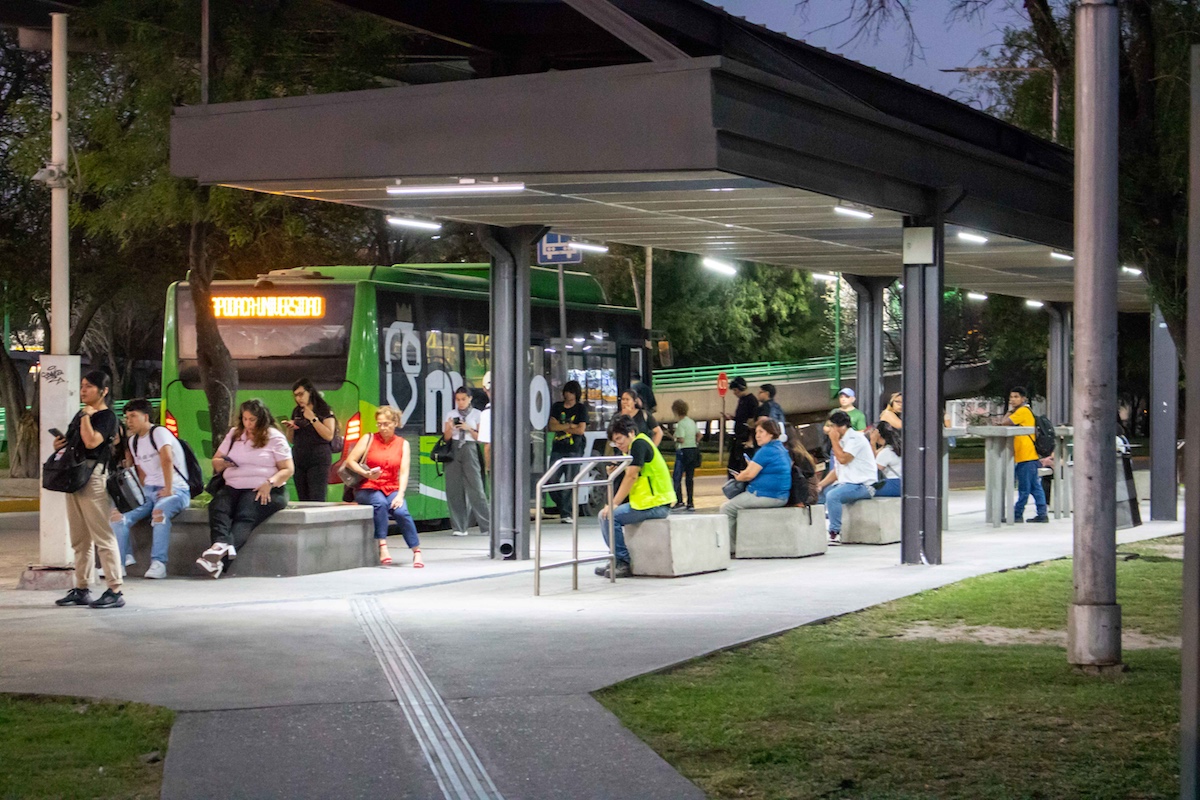
The core strategy of the Universidad Autónoma de Nuevo León's sustainable mobility program is the promotion of collective public transport—specifically the metropolitan electric transport system (metro)—which is recognized for its efficiency and low environmental impact.
To extend coverage to areas not directly connected by the metro, the use of franchised urban bus routes is encouraged; these include radial, peripheral, and local routes that facilitate access to the various campuses. Also included are intercity buses serving students from nearby municipalities, as well as hired public transport—such as taxis and ride-hailing services (Uber, DiDi, Cabify, Beat, among others)—which complement the access network.
In coordination with local transport authorities, bus routes serving the campuses have been optimized, resulting in over 40 routes that connect the areas surrounding Ciudad Universitaria and improve frequency, coverage, and accessibility for the university community.
Urban public transport routes carry around 8 million people annually who study or work at the Ciudad Universitaria campus.
- R-Álamo Santiago – Directo UANL
- R-Auto Transportes Azules y Amarillos
General Terán – Monterrey – UANL - R-Interenlace Directo Cadereyta – UANL
- R-1 Sector 1 San Nicolás – Tecnológico – Central – Las Puentes
- R-1 Sector 1 San Nicolás – Tecnológico – Directo – Pabellón
- R-1 Sector 4 Pilares – Central de Autobuses
- R-16/316 La Unidad – UANL
- R-17 Auditorio San Pedro – UANL
- 9. R-17 Pio X – UANL
- R-17 Santuario – UANL
- R-88 Cosmópolis – Jardines
- R-88 Cosmópolis – Moisés Sáenz
- R-101 Ébanos
- R-101 Manantial
- R-134 Fresnos – Puentes – 15 de Mayo
- R-134 Telmex – Metroplex – 15 de Mayo
- R-207 Penitenciaria
- R-209 Escobedo – Punta de Loma – Bosques
- R-209 Escobedo – Punta de Loma – Renacimiento – Olivos
- R-209 Exprés Escobedo – Hidalgo
- R-213 Cosmópolis – UANL
- R-213 Directa – UANL
- R-213 Quintas – UANL
- R-219 Sector 1 Tréboles – UANL – B. Reyes
- R-220 Pedregal
- R-220 Provileon
28. R-226 Sector 3 – Buena Vista – Joyas – Alameda
29. R-227 Clouthier – 16 de Septiembre
30. R-227 Clouthier – Constitución
31. R-227 Emiliano – 16 de Septiembre
32. R-227 Emiliano – Constitución
33. R-229 Ébanos – Metroplex – Mercado. Juárez
34. R-229 Robles – Metroplex – Mercado Juárez
35. R-232 La Unidad
36. R-232 La Unidad – San Marcos
37. R-316 Libramiento – Paraje San José
38. R-320 Fresnos – Puentes – Colón
39. R-685 Sector 1 Salinas Directo 213 40. R-685 Sector 2 Bosques de los Nogales

At the same time, the adoption of non-motorized and electric mobility systems—such as bicycles, electric scooters, and next-generation light transport—is being promoted. To facilitate their adoption, bike lanes, secure storage stations, and internal circulation paths have been developed on campuses. These measures yield environmental, economic, and health benefits while fostering a cultural shift toward more sustainable modes of travel, thereby helping to reduce private car use and improve urban mobility.
UANL’s sustainable mobility program represents a comprehensive effort aimed at transforming the university community's commuting culture. By combining the promotion of public transport, the strengthening of non-motorized mobility, the operation of the TigreBus, and the adoption of international principles such as the Inverted Mobility Pyramid, UANL not only addresses the environmental and mobility challenges facing the Monterrey Metropolitan Area but also positions itself as an institutional leader in creating more equitable and sustainable urban environments.
The electric mass transit system known as the Metro transports more than 3.5 million people annually who study or work at the Ciudad Universitaria campus.
More than 84,000 people pass through the pedestrian areas of the Ciudad Universitaria campus daily.

Specific objectives
- Connect the interior of the campuses with the immediate context, prioritizing safe pedestrian mobility.
- Encourage the use of non-motorized transportation on campus to improve mobility.
- Discourage the use of automobiles by reorganizing parking spaces.
- Establish collaboration agreements to efficiently connect with key stakeholders, including municipalities and state agencies.
Policies
- Priority will be given to programs and projects that promote the use of non-motorized modes of transport and ensure the safety and well-being of pedestrians.
- Non-motorized mobility within the campuses will be encouraged.
- Connections between facilities will be implemented, as well as alternatives to encourage the use of non-motorized modes of transport.
- The efficiency and safety of internal mass transit systems will be promoted.
- Projects will be promoted to reorganize and improve vehicular traffic routes.
- Accessibility between campus spaces and buildings, as well as with the immediate external context, will be promoted.
Ordering
- Planning and implementation of a support system for non-motorized mobility in the vicinity of the campus.
- Coordinate actions among departments and faculties regarding the planning, removal, and improvement of physical barriers that impede free movement between spaces and buildings.
- Coordinate with external urban transport providers regarding the planning, scheduling, and safety of their urban routes.
- Implement urban improvement measures at campus access points to regulate the entry and exit of motorized vehicles.
Planning
- Promote improvements to roadways, walkways, and pedestrian crossings to facilitate non-motorized travel on campus.
- Promote non-motorized and zero-carbon mobility.
- Promote the reorganization of spaces intended to serve motorized vehicles.
- Manage the safe removal of obstacles, objects, and/or barriers that compromise non-motorized mobility and universal accessibility.
 English
  Spanish